- I paid to get it fixed. Why is it leaking again?
- The stain is in the same place. How did they miss it?
- So what's actually letting the water in?
- My roof is only a few years old. How is it leaking?
- Shouldn't the first roofer come back and fix it for free?
- How do I make sure it gets fixed right this time?
- What do I do until it's fixed?
It rained again, and the stain on your ceiling is back. Same spot, maybe a little bigger. You already paid someone to fix this, so now you're wondering what you actually paid for, and whether you're about to pay twice.
Short answer: the first repair most likely fixed the wrong spot. The patch went on the shingles above the stain while the water was getting in somewhere else, or there was a second opening nobody found. Sometimes the patch itself failed. Once in a while it isn't the roof at all.
Here's how to figure out which one you're dealing with, and how to make sure the next fix is the last one.
I paid to get it fixed. Why is it leaking again?
Because the repair didn't stop the water where it actually gets in. It's usually one of these four:
- They fixed the wrong spot. The water was coming in higher up and running down to where you see the stain.
- There was more than one leak. One got fixed. The other one is what you're looking at now.
- The fix was just sealant. Tar or caulk smeared over a cracked boot or loose flashing dries out and cracks, and the Texas sun speeds that up.
- It isn't the roof. An attic AC drain line, a plumbing vent pipe or a window above can leave a stain that looks exactly like a roof leak. If the stain grows on dry days, check those first.
A leak coming back doesn't automatically mean your whole roof is bad. Often it's one spot that still hasn't been found.
The stain is in the same place. How did they miss it?
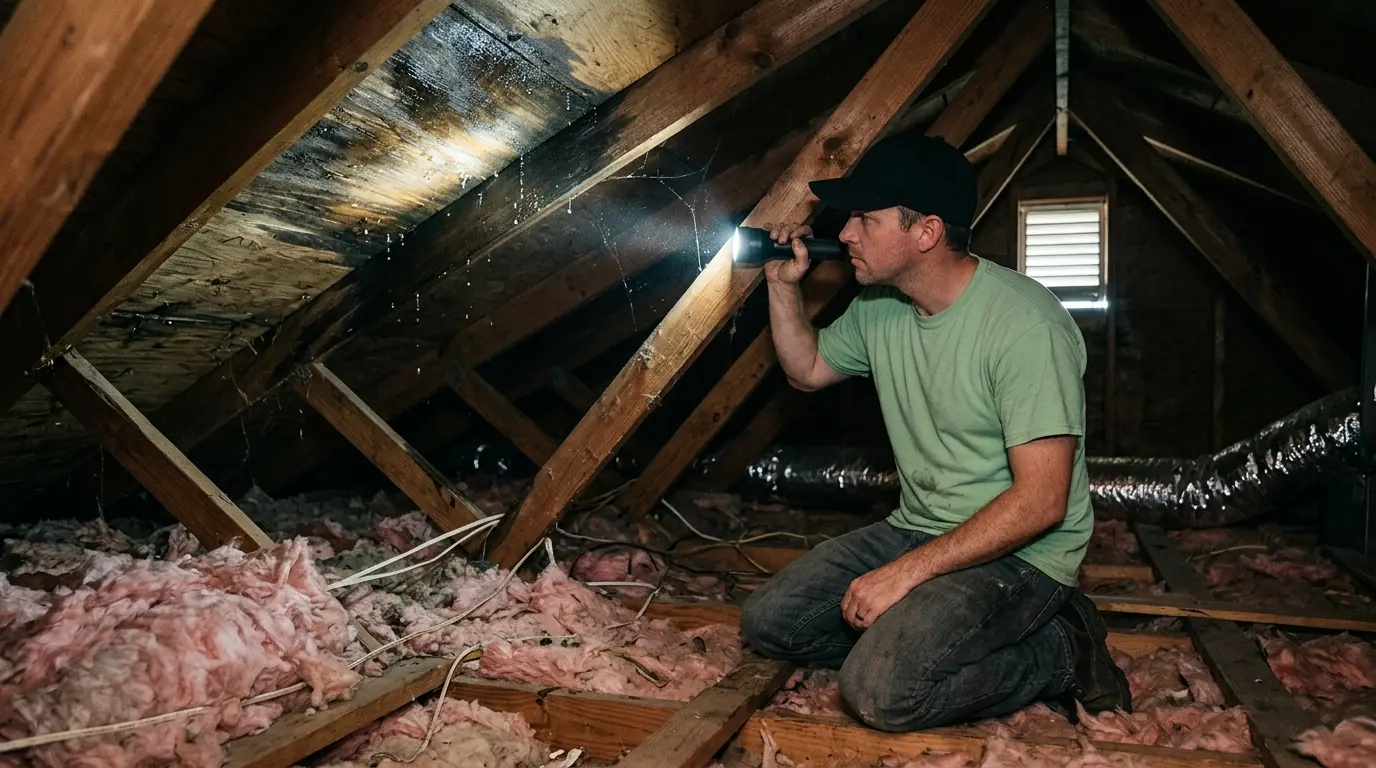
Because water almost never drips straight down. It gets in through a gap, runs along the underside of the roof deck or down a rafter, and drops wherever it finds a low point. That can be several feet from where it came in.
So if the roofer went up, looked at the shingles right above your stain and sealed them, the real hole may still be untouched. The ceiling dried out, it looked fixed, and the next hard rain proved it wasn't.
The way to find it is to start in the attic, find the wet trail on the wood, and follow the water uphill to where it starts.
So what's actually letting the water in?
Repeat leaks usually start where the roof is cut open or meets something else, not out in the middle of the shingles:
- Flashing. Valleys, chimneys and the line where a roof meets a wall all depend on metal flashing tucked under the shingles. If it's missing, bent or sitting on top of the shingles, water gets behind it.
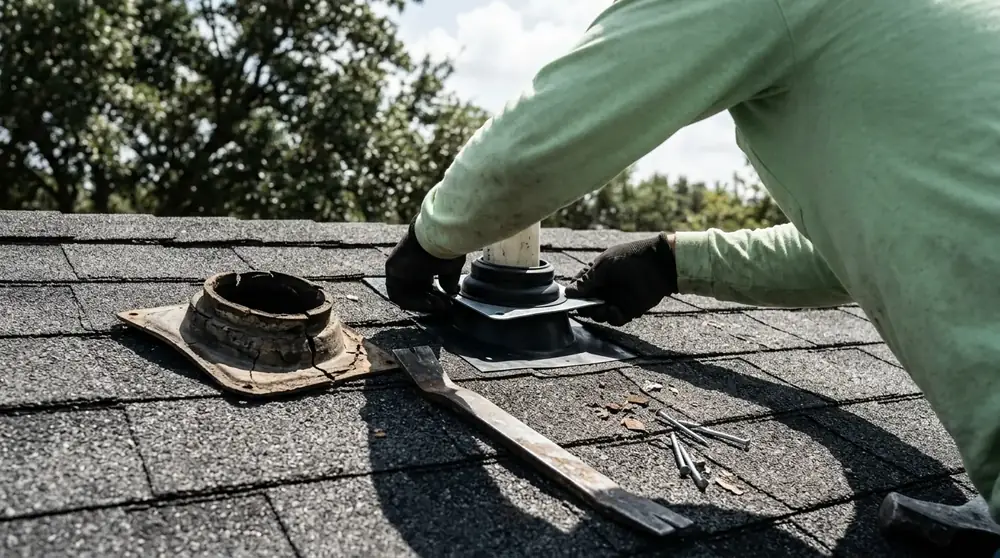
- Pipe boots. The rubber collar around a plumbing vent cracks in the sun, and animals chew them. One local roofer posted photos this year of a boot an animal had chewed through on a Copperas Cove roof.
- Nails. Nails that backed out, or were driven through the top of a shingle, leave small holes that leak only when rain blows from a certain direction.
- Hail damage somewhere else. The patched spot can hold while a cracked shingle a few feet up starts letting water in. Hail damage doesn't always leak right away, and parts of Copperas Cove took hail up to 4.5 inches on May 1, 2025.
That lines up with what Copperas Cove homeowners write in roofer reviews and neighborhood posts: a valley where flashing was never put down, pipe flashing that leaked after roofing work, a drip edge on a 2017 house that wasn't nailed down properly. You can't see any of those from the ground, which is exactly why they get missed.
My roof is only a few years old. How is it leaking?
It's frustrating, but it happens. A roof that's a few years old usually leaks because one detail was missed, not because the shingles wore out. Think flashing left out of a valley, a boot that wasn't sealed, or nails in the wrong place.
More than 2,500 new homes were under construction in Copperas Cove as of mid-2026, so plenty of local roofs are this age. A newer roof that leaks doesn't need to come off. It needs that one detail found and fixed. If it's still under the builder's or roofer's workmanship warranty, call them first and keep every piece of paperwork.
Shouldn't the first roofer come back and fix it for free?
Maybe. It depends on what they put in writing. Texas doesn't license roofers, so there's no state roofing board to complain to. Your invoice and any written workmanship warranty are what you have to go on.
Call them first and give them a fair chance to come back. When they do, ask them to show you where they think the water is getting in this time. If they never call you back (a complaint that shows up again and again in local roofer reviews), or they just want to seal the same spot again, it's fair to have someone else take a look.
How do I make sure it gets fixed right this time?
Don't let anyone fix anything until they've shown you where the water is getting in. Ask for:
- Photos of the entry point, not just the stain or the old patch.
- How they traced it. The attic, a moisture meter or a hose test. A hose test runs water over one small section of roof at a time, starting low, while someone watches inside. It's a good way to catch a leak that only shows up in certain rain.
- Why the first repair missed it, in plain words. If they can't explain it, they may not have found it either.
- The price before any work starts, so there are no surprises after.
- A written note of what was fixed, so you have it if the leak ever comes back.

That's how we work. We start in the attic, follow the water to where it gets in, show you photos of what failed, and give you the price before we pick up a tool. If you're in or around Copperas Cove, here's how our roof leak repair works.
What do I do until it's fixed?
Keep the water contained and keep a record.
- Put a bucket and towels under the drip, and move anything that can get ruined.
- Take a dated photo every time it leaks and jot down the weather: how hard it rained, how long before the drip started, and which way the wind was blowing. With a leak that keeps coming back, those notes are the most useful thing you can hand a roofer.
- If it's safe, look in the attic with a flashlight while it's raining. Step only on the joists.
- Don't add more tar or caulk. Every layer hides the real problem a little more and makes the next repair harder.
- Stay off a wet roof. It isn't worth the fall.